Thursday, July 8, 2021

July 9: The "Ugly Laws"


July 9, 1867, the first  "Ugly Law" was passed by the City of San Francisco as order #783,  “To Prohibit Street Begging, and to Restrain Certain Persons from Appearing in Streets and Public Places”.  The initial primary purpose had more to do with appearance, prohibiting both the activity of street begging and the appearance in public of “certain persons”, however the laws actually prevented those with physical disabilities from coming out in public. 

One of the most famous Ugly Laws came from Chicago 1881 ordinance: “Any person who is diseased, maimed, mutilated, or in any way deformed, so as to be an unsightly or disgusting object, or an improper person to be allowed in or on the streets, highways, thoroughfares, or public places in the city, shall not therein or thereon expose himself or herself to public view, under the penalty of a fine of $1 to $50 for each offense”.  (About $1100 in today’s dollars.)  If the offending person could not pay, they were sent to the poorhouse.

This may explain the phenomenon of “deformed” persons joining “the freak shows” in a circus.  How coincidental that the height of the commercial success of the “freak show” was during the activity of these Ugly Laws.  The Ugly Laws did not prohibit these people from being seen in public as entertainment ….. they just could not socialize with the public in restaurants, theaters, libraries, etc.  Children and adults with disabilities, even mild ones,  were hidden away or sent to asylums.

While immigrants and newly freed blacks became a big target of these laws, women bore the brunt of the Ugly Laws since “proper femininity” was definitive of how women should be.  “Columbus, Ohio had an ugly ordinance that included prohibitions on “lewd or lascivious behavior,” “indecent, immodest or filthy acts”….”  Women accused of prostitution or even having a child out of wedlock could fall victim to these Ugly Laws, which led to the famous case of Buck vs. Bell in which Justice Oliver Wendell Holmes said “Three generations of imbeciles are enough!” as he sentenced Carrie Buck to involuntary sterilization after she gave birth to a child conceived during a rape.

It was after WW2, when soldiers returned with missing limbs, scars and blindness, that these Ugly Laws began to be challenged, and recognition of the rights of the disabled began to lead the public conversations. But it was not until almost half a century later, on July 26, 1990, that the Americans With Disabilities Act was signed by President Bush.

The last arrest under an Ugly Law was in Omaha Nebraska when a homeless man with multiple scars was arrested.  The judge turned him loose by saying although the law was active and enforceable, there was no clear or legal definition of “ugly”, therefore the defendant did not meet the criteria.

Chicago repealed the last Ugly Law on the books in 1974.


Sources:

Wednesday, March 3, 2021

ELIZABETH KECKLEY - Seamstress in the White House

 On this date in history - March 4, 1861 - 


Elizabeth Keckley meets Mary Todd Lincoln on the day of Lincoln’s first 
Inauguration and ended up becoming Mrs. Lincoln’s dressmaker and companion.  Keckley was born a slave, owned by her father. She became a nursemaid to her master’s baby when she was 4 or 5. Her mother, a domestic servant and seamstress, was well liked by the family and was allowed to be taught to read and write. She taught these skills to her daughter Elizabeth.  

The white family had multiple financial problems and Elizabeth’s sewing skills were eventually used to make money for the family and their 17 children.  She offered to give all of her money to her owner in exchange for not hiring out Elizabeth’s aged mother for extra money as they were on the verge of bankruptcy.  Soon other white women were coming to her for their dresses. 

She found supporters who helped her buy her and her only son’s freedom, then moved to Washington DC. where she found it hard to set up a business unless she could find a white person to vouch that she was really free.  A client helped put her in touch with a few influential people, including Varna Davis, the wife of soon-to-be Confederate President Jefferson Davis.  Davis encouraged Elizabeth to come with her to the South “….as a war will soon be upon us.”  Elizabeth declined.  

The Lincolns soon arrived in DC to get ready for Lincoln’s inauguration.  A DC woman needed a dress made for a social meeting she had with the Lincolns,  but Elizabeth turned it down due to the late notice.  The customer told her “I have often heard you say that you would like to work for the ladies of the White House. Well, I have it in my power to obtain you this privilege. I know Mrs. Lincoln well, and you shall make a dress for her provided you finish mine in time to wear at dinner on Sunday.” 

The dress was made and Elizabeth was introduced to Mary Todd Lincoln.  They developed a strong business and personal relationship.  Elizabeth’s only son, George, a Union soldier, was killed in battle about six months before Willie Lincoln died.  Two mothers mourning the death of their sons bonded Elizabeth and Mary Lincoln even closer.  When Lincoln was shot, Mary Lincoln cried out for Elizabeth to be brought to her side for comfort. 

In 1868, Elizabeth wrote a book about her years in the White House, Behind the Scenes or Thirty Years a Slave, Four Years in the White House, believing it would  help “redeem her own character as well as Mrs. Lincoln’s.”  There had been great controversy about Mrs. Lincoln’s decision to try to sell some of her clothes to raise money and Elizabeth had helped with this project.

“By writing down the story of her enslavement, her intimate conversations with Washington’s elite women, and her relationship with Mary Lincoln, Keckly violated social norms of privacy, race, class, and gender.  Although other formerly enslaved people like Frederick Douglass wrote generally well received memoirs during the same time period…..” , the book by Elizabeth, a black woman, seemed to enrage the public, with some pointing this as a reason black women should not be educated.

Mrs. Lincoln felt “betrayed by the intimate details” and never spoke to Elizabeth again. Elizabeth’s customers began disappearing and she began training other seamstresses. “In 1892, she accepted a position as the head of Wilberforce University’s Dept of Sewing and Domestic Science Arts.”  She died May 26, 1907, at the age of 89, a t the National Home for Destitute Colored Women and Children.

Wednesday, June 17, 2015

May 7: Indiana Territory

On this date in History ... May 7, 1800:

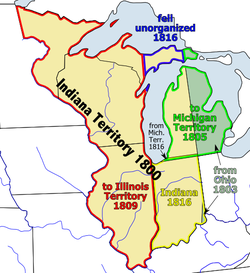
A bill is passed to divide the Northwest Territory and the Indiana Territory is created. The capital was Vincennes, the oldest settlement in Indiana territory, and William Henry Harrison, who would become the 9th President of the United States, was made governor of the Territory less than a week later.  

After Ohio, Michigan and Illinois were formed (in 1803, 1805, and 1809), various areas in Indiana, particularly those near the Michigan line and in Wayne County, by the Ohio line, wrote to the government protested the distance of Vincennes from the rest of the people which made it difficult to conduct business with travel times so far.  In 1813, the capital was moved to Corydon.  After a few years, complaints about the distance again surfaced. It was decided in 1820 to move the capital to a more central location and in 1821, the city of Indianapolis was founded just for this purpose.


May 6: Chinese Exclusion Act

On this date in History ... May 6, 1882: 

President Arthur signed and approved the Chinese Exclusion Act, the first significant law restricting immigration, that one senator called “the legalization of racial discrimination.” For the first time, Federal law denied entry of an ethnic working group on the premise that it “endangered the good order of certain localities.” It was an absolute ten-year freeze or moratorium for labor immigration from China.  

While only intended to last ten years, the law was intended to last only 10 years, but wasn’t repealed until 1943. The first major Chinese immigration was during the California gold rush that started in 1848. The Chinese population was “tolerated” as long as the gold was plentiful, but when the gold started running low, animosity toward “the foreigners” rose. The Chinese immigrants moved to larger cities, such as San Francisco, and took low paying jobs such as laundry and restaurant work where they were soon blamed for depressed wage levels.  

Chinese who were already in America when this bill passed now had additional requirements.  If they left the country, they had to get new certification to get back in the country, something that was very difficult under the 1882 Act.  

By 1943, the anti-Chinese feeling in America was much subdued and Congress repealed all exclusion Acts, allowing 105 Chinese born immigrants per year and gave foreign-born Chinese who were in America the right to apply for naturalization.


Sources include:  
http://www.ourdocuments.gov/doc.php?flash=true&doc=47 
http://www.ourdocuments.gov/doc_large_image.php?flash=true&doc=47

.

Tuesday, June 16, 2015

May 5: Alan Shepard

On this date in History .... May 5, 1961:  

Alan Shepard becomes the 1st American & the 2nd person in space on a short, 15 minute flight as part of the Mercury Seven astronauts, the first American space program.

In 1971, he became commander of Apollo 14 & the 5th person to walk on the moon. “When reporters asked Shepard what he thought about as he sat atop the Redstone rocket, waiting for liftoff, he replied, ‘The fact that every part of this ship was built by the low bidder.’”    

Ten years later, at the age of 47 and the oldest astronaut at the time, Shepard became the commander of Apollo 14, becoming “the fifth and oldest person to walk on the moon.”  He was the only member of the original Mercury Seven to walk on the moon. While he was on the moon, he hit two golf balls. 

Shepard died of leukemia in 1998 and his wife of 53 yrs died 5 weeks later.

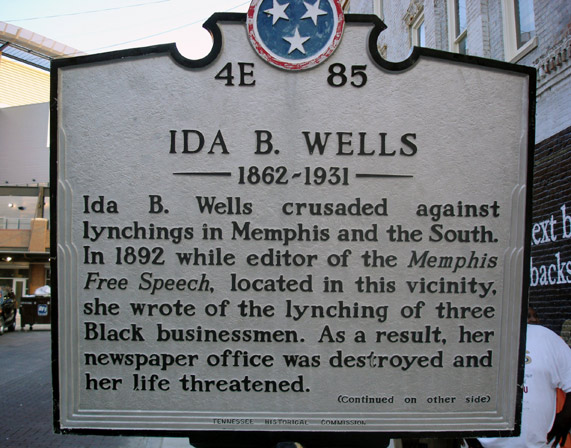
May 4: Ida B. Wells

On this date in History .... May 4, 1884:

Ida B. Wells, a schoolteacher, was sitting in a woman’s railroad car, reading, when the conductor ordered her to move to the “Jim Crow” car. She refused, saying that was a smoking car and she was in the ladies car.  When the conductor grabbed her, she “sunk her teeth” into his arm.  

The 1875 Civil Rights Act had banned discrimination based on race on transportation but in 1883, the Supreme Court declared this act unconstitutional.  The ruling said Congress did not have the power to void discrimination acts by individuals as it did on state action or laws  Private acts of racial discrimination were simply private wrongs that the national government was powerless to correct”.

When she sued the railroad for her treatment, her attorney was paid off by the railroad, so she hired a white attorney and won a $500 settlement.  The judge says she was indeed a lady.  She was a schoolteacher and was “dressed accordingly.”  Her victory was overturned by the Tennessee Supreme Court.  Ms. Wells went on to be a civil rights activist by being a journalist. 

As a journalist, she became aware that the new black middle class was at risk when three of her friends were lynched.  Before this, she had thought such lynchings, while deplorable, were targeted at those in the lower class who may have been involved in activities that merited a kind of punishment.  Her eyes were then opened to see that lynchings were a way to “get rid of negroes who acquired wealth and property and thus keep the race terrorized…..”


Sources include: 

Tuesday, May 5, 2015

May 3: Mills College Allows Men to Enroll

On this date in History ... May 3, 1990:

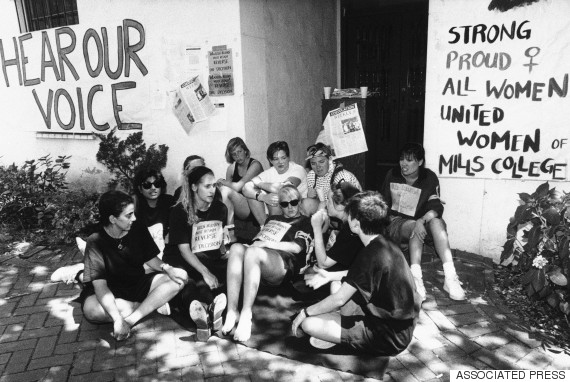
Mills College, a women’s college, voted to allow men to enroll as a means to  to help their financial situation.  

The decision resulted in a 2 week strike by students and faculty.  Over 300 students blockaded the administration offices and boycotted classes. Faculty and alumni supported the student movement by offering pay cuts, to teach more classes, to collect more endowment pledges and more alumni donations, showing the administration they could survive their financial needs. 

On May 18, the trustees reversed their decision, becoming the only women's college that reversed its financial decision to become coed because of the will of its students, alumnae, and faculty.

May 2: J. Edgar Hoover Dies

On this date in History ..... May 2, 1972:  

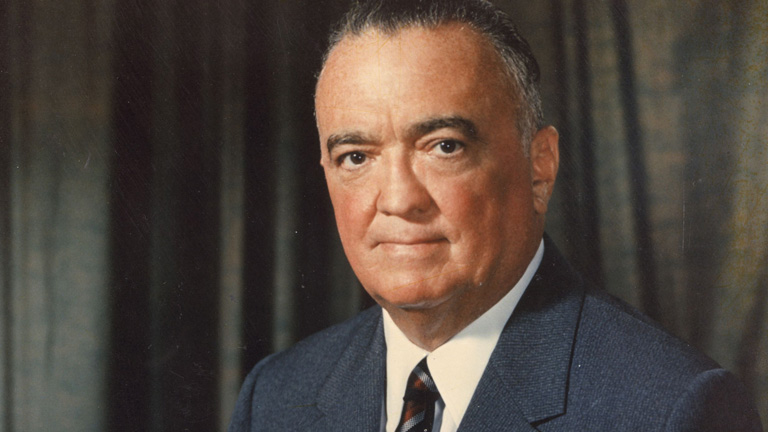
Just before the Watergate scandal erupted, J. Edgar Hoover dies after re-creating and leading the FBI for nearly 5 decades, serving under 8 presidents. 

He built the corruption-ridden agency into an efficient crime-fighting machine, establishing a centralized fingerprint file, a crime laboratory, and a training school for agents. 

After WWII, he worked closely with the House Un-American Activities Committee (HUAC) and Senator Joseph McCarthy, the architect of America's second Red Scare.  

By 1969, Congress was suspicious of the FBI’s abuse of power and for the 1st time Hoover found himself under criticism and the Congressional microscope.  Because of these inquiries, Congress passed laws requiring congressional approval of FBI appointments and limited time in office to only 10 yrs.

May 1: Movie "Citizen Kane" is released

On this date in History .... May 1, 1941:  


Citizen Kane is released.  It bombs at the box office and only after it’s re-release years later did it actually receive the accolades it deserved.  


It is the film that gave us the famous single word line of "Rosebud".


Previews of the film drew great reviews from critics, except for one. The acclaimed Queen of Hollywood Gossip, Hedda Hopper, didn’t like the way Charles Foster Kane portrayed her friend William Hurst.  She went to Hurst himself to complain who began running a campaign against the film including refusing to run ads for it in his newspapers and gaining support of people such as Louis B. Mayer. 

Wells threatened to sue Hurst and RKO Pictures if the film wasn’t released. Only after its re-release did it become a big hit, grabbing the #1 spot on the poll of America’s Greatest Films.

Click here for a short clip......

.

Wednesday, April 29, 2015

April 29: "Ernest T. Bass"

On this date in History ..... April 28, 1963:  

The character of Ernest T. Bass appears for the first time on The Andy Griffith Show.  

Howard Morris played Bass for only five episodes but is best remembered for this role in spite of his many other accomplishments such as being a classically trained Shakespearean actor. 


He was in the U.S. Army Special Service where his commander was Maurice Evans (played the role of father to Samantha on “Bewitched”). Other soldiers in the unit included Carl Reiner ("Alan Brady" of the Dick Van Dyke show) and Werner Klemperer ("Colonel Klink" of the show "Hogan's Heroes").  Morris directed some of the Dick Van Dyke and Hogan’s Heroes episodes.  

He was a talented voice actor and in high demand for cartoons. Some of his voices included Jet Screamer (“The Jetsons”), Mr. Peebles (“Magilla Gorilla”), Jughead (“The Archie Show”), Hamburgler (McDonalds commercials), Flem (“Cow and Chicken”), various voices on “The Flintstones” and many more. 


Many museums and universities host “Ernest T. Bass Day” in which people bring in unidentified rocks for inspection by the science departments.  

Morris died in 2005.

.

April 28: Muhammad Ali

On this date in History .... April 28, 1967:  


Muhammad Ali refuses to be inducted in the Army during the war with Vietnam, claiming religious reasons.  He said, “I ain’t got no quarrel with those Vietcong. They never called me n*****.”  

He was prosecuted for draft evasion and sentenced to five years and $10,000 but remained out of jail during the appeal. He was stripped of his title and banned from boxing for three years. 

On June 28, 1971, the Supreme Court overturned his draft evasion conviction with an 8-0 vote, saying the government had failed to properly specify why his application for conscientious objector status had been denied.

.

Tuesday, April 28, 2015

April 26: Lucille Ball Dies

On this date in History .... April 26, 1989:  


Lucille Ball dies a week after open heart surgery, on the day of her friend Carol Burnett’s 56th birthday.  Burnett received the flowers that Lucy had ordered earlier for delivery on her birthday.  


Lucy was the first woman to own her own film studio and the first woman to receive the International Radio and Television Society’s Gold Medal. 

Her annual salary while President of Desilu was reported at $100,000 (in 1965, the average annual salary in the U.S. was under $4700).  

In 1935, she signed her first promotional agreement with Max Factor and again in 1942. Of all the stars, she had the longest association with the Max Factor company.  

She started out as a model but was stricken by rheumatoid arthritis early in her career and spent two years re-learning how to walk. While making a 1933 movie, she was required to shave off her eyebrows and they never grew back.  She was also once fired from an ice cream parlor for forgetting to put bananas in the banana splits.

.

Saturday, April 25, 2015

April 24: Library of Congress

On this date in History .... April 24, 1800:

John Adams signs an Act of Congress to move the govt from Philadelphia to Washington DC.  Part of the bill provided for $5000 to establish a library for Congress, "for the purchase of such books as may be necessary for the use of Congress ..., “.  Thomas Jefferson followed this in 1802 by signing the first law creating the post of Librarian of Congress. 

The Library of Congress is the oldest federal cultural institution in the U.S. and is the largest library in the world with over 745 miles of shelves to hold close to 145 million items. It was first housed in the Capital building until the British burned the Capitol in the War of 1812.

Photo courtesy of www.teachingamericanhistory.org
Jefferson sold his personal collection of over 6000 books to rebuild the library.  This collection was considered unique in that it was a working scholar’s collection and not just a “gentleman’s collection” used strictly for display. 

While the library was originally established as a research arm for Congress, it was Jefferson’s belief that “all subjects are important to the library of the American legislature,” that formed the rationale behind the collection policies of the library to this day.


Thursday, April 23, 2015

April 23: New Coke

On this date in History .... April 23, 1985:

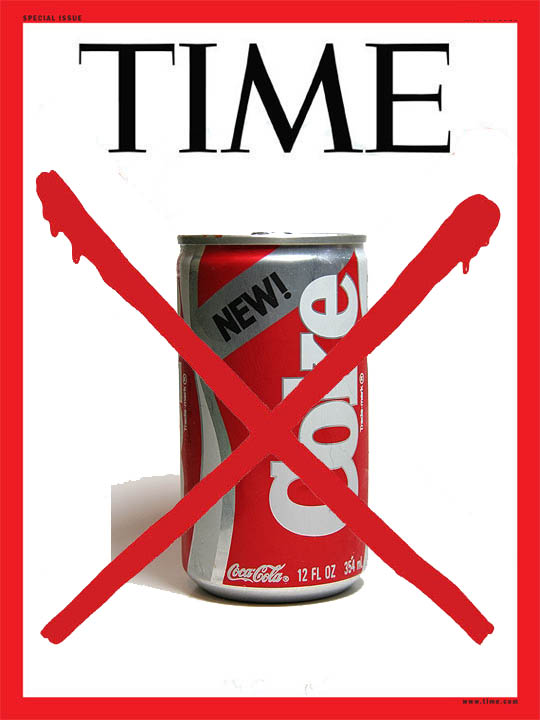
Coca-Cola made an announcement that forever placed them in the Top Ten  of “Worst Marketing Blunders” when the company announced the introduction of New Coke.  They discontinued producing the original Coke formula and New Coke took its place (the formula for Diet Coke was not changed, however).   

Robert Goizueta told employees when he became CEO in 1980 “There are no sacred cows in how the company did its business”. The public was not amused, nor impressed.  Ads that appeared on the Houston Astrodome scoreboard were booed heavily by the crowd.  Cases of Coke were selling on the black market for $30 a case. Even Fidel Castro, who was a big Coke fan, called New Coke “a sign of American capitalistic decadence.” Goizueta’s own father, who had fled Cuba to avoid Castro’s rule, said it was the only time he had agreed with Castro. Bill Cosby discontinued being the Coke spokesman because he said Coke had damaged his credibility. 

The backlash was so severe (thousands of phone calls and over 40,000 letters) that it only took three months for Coca Cola to backpedal and re-introduce the original Coke formula under the name of “Coke Classic” on July 10th.  It was such big news that ABC’s Brian Jennings interrupted “General Hospital” with the headline.  

Within six months, Coke sales increased at more than twice the rate of Pepsi and by the end of the year, New Coke was a mere 3% of the market share. It was eventually discontinued and “Coke Classic” was relabeled just plain “Coke” again.  

"There is a twist to this story which will please every humanist and will probably keep Harvard professors puzzled for years," said Coke President Donald Keough at a press conference. "The simple fact is that all the time and money and skill poured into consumer research on the new Coca-Cola could not measure or reveal the deep and abiding emotional attachment to original Coca-Cola felt by so many people."   


Wednesday, April 22, 2015

April 22: Earth Day

On this date in History .... April 22, 1970:  

The first Earth Day is held to promote awareness of the state of the planet.  

Polls the following year indicate it worked: In 1971, 25% of the public stated that environmental protection should be a goal. This was a 2500% increase over polls taken in 1969. “Earth Day” went global in 1990 with 140 participating nations. 

The brainchild of Sen. Gaylord Nelson of Wisconsin, the seeds of the idea came from a bestselling book “Silent Spring” which raised awareness on the dangers of pesticides. The chemical industry mounted a counterattack against the book, calling author Rachel Carson a "hysterical woman, unqualified" to write this kind of book. 

Buy the book on Amazon (I make no commission on the sale of this book): http://www.amazon.com/s/ref=nb_sb_noss_1?url=search-alias%3Daps&field-keywords=silent+spring


Tuesday, April 21, 2015

April 21: Lincoln's Funeral Train

On this date in History ..... April 21, 1865:

Marker on the lawn of the Indiana State House, Indianapolis IN
Lincoln’s funeral train leaves Washington in what became the nation’s first national funeral. The train also carried the exhumed coffin of his 11 year old son Willie (who had died in 1862) so he could be buried next to his father. 

The train traveled through seven states and 180 cities on its way to the burial site in Illinois, where Lincoln would be buried on May 4th.  It stopped in small & large cities with millions lining the railway in the rain, wind & during the night to see the train. It was reported that people waited in line as long as five hours to walk past Lincoln's coffin.

When the train went through (my hometown of) Richmond, Indiana, Governor Oliver P. Morton boarded the train. At least 50,000 walked through the Indianapolis State House rotunda to view the open casket that sat on display.

The train car that carried Lincoln's body was destroyed in a fire in 1911.

Friday, April 10, 2015

April 10: American Patent System

On this date in History .... April 10, 1790:

President George Washington signed the bill which began the American patent system. For the first time in history, the law recognized the right of an inventor to profit from his inventions. 

Early patents were reviewed by Cabinet members until Jefferson realized it was too much to handle. The official patent office was formed in 1802 to take care of the unpredicted volume. 


The first patent was issued in 1790 to Samuel Hopkins for an improvement in the making of potash (used for lye soap). Hopkins also received the first Canadian patent for his invention.


The first woman to receive a patent is a little muddled. In 1715, Sybilla Masters invented a new corn mill to make hominy from Indian corn.  She took the patent application to England but the patent had to be issued in her husband’s name because she was a woman.  This makes her the first American woman inventor.  

However the 1st actual patent held by a woman was issued to Hannah Slater in 1793 for a new way to spin cotton thread.  Hannah was the wife of Samuel Slater, a prominent businessman and owner of multiple of mills and cloth spinning factories.  Samuel Slater was trained in England and by the time he was 21, he was well versed in the machinery and their operation.  He heard of America's growing interest in the machinery but England had laws that prevent the designs from being exported.  He memorized as much about the machinery as possible and brought the information, all in his head, to America.


Thursday, April 9, 2015

April 9: "Journey of Reconciliation"

On this date in History ... April 9, 1947:  


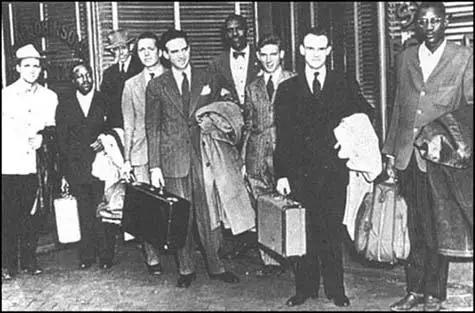
Members of the Journey of Reconciliation in 1947. Left to right: Worth
Randle, Wallace Nelson, Ernest Bromley, 
James Peck
, Igal Roodenko,
Bayard Rustin
, Joseph Felmet, George Houser and Andrew Johnson.

Sixteen men (eight white and eight black) begin a 2-week “Journey of Reconciliation” to challenge segregation laws on interstate buses in the South.  

Inspired by the Supreme Court case Morgan v. Virginia (that story to be posted on June 3), which declared segregation on interstate buses to be unconstitutional. Many southern states were blatantly ignoring this ruling. 

The riders suffered several arrests but in North Carolina, the judge showed his particular disdain for the white men taking part in the rides:  "It's about time you Jews from New York learned that you can't come down here bringing your niggers with you to upset the customs of the South. Just to teach you a lesson, I gave your black boys thirty days [on a chain gang], and I give you ninety."

The Journey of Reconciliation achieved a great deal of publicity and was the start of a long campaign of direct action by the Congress of Racial Equality. In February 1948 the Council Against Intolerance in America gave George Houser and Bayard Rustin the Thomas Jefferson Award for the Advancement of Democracy for their attempts to bring an end to segregation in interstate travel.

Sources include: http://spartacus-educational.com/USAjor.htm

Wednesday, April 8, 2015

April 8: 17th Amendment

On this date in History .... April 8, 1913:

The 17th amendment was passed, allowing voters to cast direct votes for U.S. senators, who were previously selected by state legislators. 

The founding fathers were not confident of the “common man’s” ability to elect senators so they decided the politicians of each state, who were deemed smarter and more informed, would elect the senators.   

Each state elected two senators for a six-year term.  But as political corruption, special interests and political machines moved into state politics, the elected senators were viewed as nothing but puppets.  When one party or another dominated the state for lengthy periods of time, some open senate seats went unfilled for months and years.

The "Oregon System" was tried.  In Oregon, a primary was held to get the voters' choice and then the legislature would pledge candidates based on the voters' preference.  However an investigation into corruption of this system in Illinois caused the realization that a constitutional amendment was needed to put the vote into the voters' hands and keep local politics (i.e. local corruption) out of it.

The 17th Amendment put the power of selection into the hands of the “common man”.  

Tuesday, April 7, 2015

April 7: Crossing Burning is Free Speech

On this date in History ... April 7, 2003:  

The Supreme Court decided the case of Virginia v. Black (5-4) that cross burning was protected under the First Amendment’s Freedom of Speech, but, according to the opinion written by Sandra Day O’Conner, “..a state, consistent with the First Amendment, may ban cross burning carried out with the attempt to intimidate.” 

In so doing, the Court created a new area of constitutionally unprotected speech for “true threats.”  

Clarence Thomas wrote the dissent, stating, “This statute prohibits only conduct, not expression. And, just as one cannot burn down someone’s house to make a political point and then seek refuge in the First Amendment, those who hate cannot terrorize and intimidate to make their point.”


.