Showing posts with label women. Show all posts

Wednesday, March 3, 2021

ELIZABETH KECKLEY - Seamstress in the White House

 On this date in history - March 4, 1861 - 


Elizabeth Keckley meets Mary Todd Lincoln on the day of Lincoln’s first 
Inauguration and ended up becoming Mrs. Lincoln’s dressmaker and companion.  Keckley was born a slave, owned by her father. She became a nursemaid to her master’s baby when she was 4 or 5. Her mother, a domestic servant and seamstress, was well liked by the family and was allowed to be taught to read and write. She taught these skills to her daughter Elizabeth.  

The white family had multiple financial problems and Elizabeth’s sewing skills were eventually used to make money for the family and their 17 children.  She offered to give all of her money to her owner in exchange for not hiring out Elizabeth’s aged mother for extra money as they were on the verge of bankruptcy.  Soon other white women were coming to her for their dresses. 

She found supporters who helped her buy her and her only son’s freedom, then moved to Washington DC. where she found it hard to set up a business unless she could find a white person to vouch that she was really free.  A client helped put her in touch with a few influential people, including Varna Davis, the wife of soon-to-be Confederate President Jefferson Davis.  Davis encouraged Elizabeth to come with her to the South “….as a war will soon be upon us.”  Elizabeth declined.  

The Lincolns soon arrived in DC to get ready for Lincoln’s inauguration.  A DC woman needed a dress made for a social meeting she had with the Lincolns,  but Elizabeth turned it down due to the late notice.  The customer told her “I have often heard you say that you would like to work for the ladies of the White House. Well, I have it in my power to obtain you this privilege. I know Mrs. Lincoln well, and you shall make a dress for her provided you finish mine in time to wear at dinner on Sunday.” 

The dress was made and Elizabeth was introduced to Mary Todd Lincoln.  They developed a strong business and personal relationship.  Elizabeth’s only son, George, a Union soldier, was killed in battle about six months before Willie Lincoln died.  Two mothers mourning the death of their sons bonded Elizabeth and Mary Lincoln even closer.  When Lincoln was shot, Mary Lincoln cried out for Elizabeth to be brought to her side for comfort. 

In 1868, Elizabeth wrote a book about her years in the White House, Behind the Scenes or Thirty Years a Slave, Four Years in the White House, believing it would  help “redeem her own character as well as Mrs. Lincoln’s.”  There had been great controversy about Mrs. Lincoln’s decision to try to sell some of her clothes to raise money and Elizabeth had helped with this project.

“By writing down the story of her enslavement, her intimate conversations with Washington’s elite women, and her relationship with Mary Lincoln, Keckly violated social norms of privacy, race, class, and gender.  Although other formerly enslaved people like Frederick Douglass wrote generally well received memoirs during the same time period…..” , the book by Elizabeth, a black woman, seemed to enrage the public, with some pointing this as a reason black women should not be educated.

Mrs. Lincoln felt “betrayed by the intimate details” and never spoke to Elizabeth again. Elizabeth’s customers began disappearing and she began training other seamstresses. “In 1892, she accepted a position as the head of Wilberforce University’s Dept of Sewing and Domestic Science Arts.”  She died May 26, 1907, at the age of 89, a t the National Home for Destitute Colored Women and Children.

Tuesday, June 16, 2015

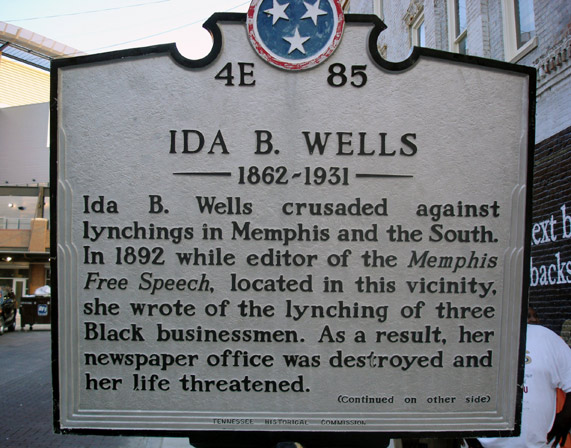
May 4: Ida B. Wells

On this date in History .... May 4, 1884:

Ida B. Wells, a schoolteacher, was sitting in a woman’s railroad car, reading, when the conductor ordered her to move to the “Jim Crow” car. She refused, saying that was a smoking car and she was in the ladies car.  When the conductor grabbed her, she “sunk her teeth” into his arm.  

The 1875 Civil Rights Act had banned discrimination based on race on transportation but in 1883, the Supreme Court declared this act unconstitutional.  The ruling said Congress did not have the power to void discrimination acts by individuals as it did on state action or laws  Private acts of racial discrimination were simply private wrongs that the national government was powerless to correct”.

When she sued the railroad for her treatment, her attorney was paid off by the railroad, so she hired a white attorney and won a $500 settlement.  The judge says she was indeed a lady.  She was a schoolteacher and was “dressed accordingly.”  Her victory was overturned by the Tennessee Supreme Court.  Ms. Wells went on to be a civil rights activist by being a journalist. 

As a journalist, she became aware that the new black middle class was at risk when three of her friends were lynched.  Before this, she had thought such lynchings, while deplorable, were targeted at those in the lower class who may have been involved in activities that merited a kind of punishment.  Her eyes were then opened to see that lynchings were a way to “get rid of negroes who acquired wealth and property and thus keep the race terrorized…..”


Sources include: 

Tuesday, May 5, 2015

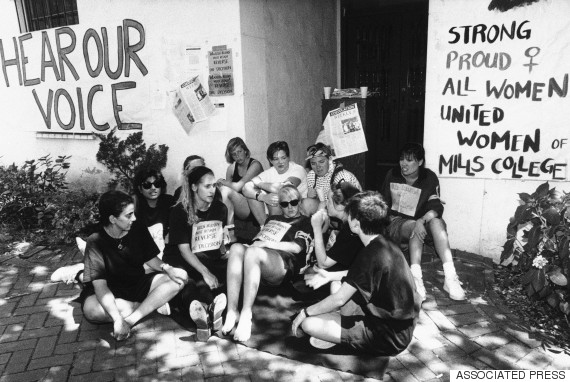
May 3: Mills College Allows Men to Enroll

On this date in History ... May 3, 1990:

Mills College, a women’s college, voted to allow men to enroll as a means to  to help their financial situation.  

The decision resulted in a 2 week strike by students and faculty.  Over 300 students blockaded the administration offices and boycotted classes. Faculty and alumni supported the student movement by offering pay cuts, to teach more classes, to collect more endowment pledges and more alumni donations, showing the administration they could survive their financial needs. 

On May 18, the trustees reversed their decision, becoming the only women's college that reversed its financial decision to become coed because of the will of its students, alumnae, and faculty.

Tuesday, April 28, 2015

April 26: Lucille Ball Dies

On this date in History .... April 26, 1989:  


Lucille Ball dies a week after open heart surgery, on the day of her friend Carol Burnett’s 56th birthday.  Burnett received the flowers that Lucy had ordered earlier for delivery on her birthday.  


Lucy was the first woman to own her own film studio and the first woman to receive the International Radio and Television Society’s Gold Medal. 

Her annual salary while President of Desilu was reported at $100,000 (in 1965, the average annual salary in the U.S. was under $4700).  

In 1935, she signed her first promotional agreement with Max Factor and again in 1942. Of all the stars, she had the longest association with the Max Factor company.  

She started out as a model but was stricken by rheumatoid arthritis early in her career and spent two years re-learning how to walk. While making a 1933 movie, she was required to shave off her eyebrows and they never grew back.  She was also once fired from an ice cream parlor for forgetting to put bananas in the banana splits.

.

Wednesday, April 2, 2014

March 22: The ERA Amendment

On this date in History .... March 22, 1979:

The 7-year deadline to pass the ERA (Equal Rights Amendment) expired with only 35 of the required 38 states ratifying the amendment. (Indiana was the last state to ratify with a single tie-breaking vote.) Congress extended the deadline to June 30, 1982. 

The extension was controversial and President Carter signed it while expressing doubt about proper procedure. The issue of the extension being unconstitutional went to the Supreme Court who, in October 1982, declared it a moot point since no other states ratified the ERA in the extension period anyway.


Sunday, March 9, 2014

March 7: First Woman Director Honored

On this date in History ... March 7, 2010:  

Kathryn Bigelow becomes the first woman director to win a Best Director Academy Award. Among those also nominated that year was her ex-husband, James Cameron, for his film "Avatar". 

In her acceptance speech she said,  "I hope I'm the first of many [women], and of course, I'd love to just think of myself as a filmmaker. And I long for the day when that modifier can be a moot point.”

MARCH: WOMEN IN HISTORY MONTH


March 3: Women and the Supreme Court

On this date in History .... March 3, 1879:

Belva Lockwood became the first woman sworn in as a member of the U.S. Supreme Court Bar, and was the first woman to argue a case before the Supreme Court. 

In 1884, Lockwood became the second woman (after Victoria Woodhull) to run for President of the United States. She was the first to appear on the election ballot and to engage in a full-fledged campaign as the candidate for the National Equal Rights Party. 

In 1914, when she was 84 yrs old and asked whether a woman would one day be president she replied, “If a woman demonstrates that she is fitted to be president she will someday occupy the White House. It will be entirely on her own merits, however. No movement can place her there simply because she is a woman. It will come if she proves herself mentally fit for the position.”

MARCH:  WOMEN'S HISTORY MONTH

Sunday, July 21, 2013

July 21: Mary Edward Walker

On this date in History .... July 21, 1861:

Dr. Mary Walker, a Civil War surgeon and the nation's first female surgeon , was awarded the Medal of Honor, for her efforts at Bull Run on July 21,1861, becoming the only woman to receive the Medal of Honor and one of only eight civilians to ever receive it. She was recommended for the medal after the war by General William Tecumseh Sherman. President Andrew Johnson signed his approval in 1865. 

Her name was removed from the honor list of awardees in 1917, along with others, when the terms used to designate eligibility for the award were reappraised. She refused to surrender the medal, however, and continue to wear it for the rest of her life. In 1977, thanks to the efforts of her family and a Congressional reappraisal of her achievements, the honor was restored.

Mary Walker
Dr. Walker was a militant feminist before the word became part of our vocabulary and worked especially hard on "dress reform" as part of women's emancipation.

Born a farmer’s daughter, she did not wear women’s clothing doing farm labor because it was too restricting and refused to “dress as a woman” while doing medical work during the war. The only women in her 1855 medical class, after graduation she married a doctor but kept her own name. She volunteered as a surgeon, working on the front lines.

She refused to wear cumbersome skirts while doing medical work during the Civil War. On April 10, 1864, when she took a wrong turn on a road, she was captured and accused of being a spy since she was “disguised” in men’s clothing, making her the first female POW.  Upon release, she worked in a women’s prison, where the women prisoners didn’t like her wardrobe of long pants and a tunic & asked for a “real” (man) doctor. 

Mary Walker
After the war she became a writer/speaker in the suffrage movement, particularly on the topic of women’s clothing.  She was arrested for impersonating a man several times, although she argued that Congress had awarded her special permission to dress in this way.


.

Friday, July 19, 2013

July 19: First Women's RIghts Convention

On this date in History .... July 19, 1848:  

The first women's rights convention is held in Seneca Falls, NY.  Over 200 women attended. 

The organizers, Lucretia Mott and Elizabeth Cady Stanton, were abolitionists who had met in London at the 1840 World Anti-Slavery Convention. Because they were women, they were barred from the convention floor, igniting an indignation that became the seed of the women’s rights movement in the U.S.  

12 resolutions were passed at the convention, 11 of them unanimously.  The one that caused conflict was to enable women to vote. After much debate it passed and received much public ridicule, causing some of the supporter to back off. 

The 19th Amendment, giving women the right to vote, was finally passed over 70 years later, in 1920.


This mug would be a great gift for the 
"women's history" fan!  Click for more info.


.

Friday, June 14, 2013

June 15: Bessie Coleman

On this date in History .... June 15, 1921:


Bessie Coleman became the first African American woman to earn an aviator’s license and the first American of any race or gender to receive an International Aviation License. 

No one in the U.S. would teach her to fly because she was (a) a woman and (b) black so she had to go to France for lessons.  She became a “barnstormer” show pilot and an immediate media sensation when she returned to the U.S.  She encouraged other African Americans to learn to fly but refused to perform at locations that would not admit those of her race.


Photo courtesy of civilrights.si.edu 
She was invited as a guest of honor to attend the all-black musical ‘Shuffle Along.’ The entire audience, including the several hundred whites in the orchestra seats, rose to give the first African American female pilot a standing ovation.” (quote source: pbs.org).  

Coleman died in a plane accident at the age of 34 when an unsecured wrench got caught in the control gears and she fell to her death. For a number of years, starting in 1931, Chicago pilots had an annual fly-over of her grave. 

.

Monday, June 3, 2013

June 3: Corning Glass Works vs. Brennan

On this date in History ... June 3, 1974:

The Supreme Court rules in Corning Glass Works vs. Brennan

Corning’s inspectors during the day shift were women but the company wanted to start a night shift inspector position. At the time, NY and PA law prohibited women from working nights. Since the inspector position had traditionally been held by women, men viewed it as “women’s work” and refused to take the night job. Corning argued that ‘market forces’ required them to pay men more to get them to take what they viewed as inferior (women’s) work. 

Corning tried to defend its pay policy by claiming it was a shift differential pay.  But they still only hired men for the night shift, denying women the opportunity for the higher pay.

The Court rejected the argument, recognizing that the company was still paying men and women different wages for the same work, illegal under the Equal Pay Act of 1963, and that just because men wouldn’t work for “women’s pay”, didn’t mean it was ok to pay men more for the same job.

Sources for this article include The U.S. Supreme Court Center, i.e. supremejustia.com 

.

Sunday, June 2, 2013

June 1: Senator Margaret Chase

On this date in History ... June 1, 1950:

Senator Margaret Chase Smith became the first Senator to denounce McCarthy’s anti-communist tactics.

Following her "Declaration of Conscience" speech, some pundits speculated that she might be the Vice Presidential candidate on the 1952 Republican ticket. She had other ambitions & became the first woman to have her name placed in nomination for the presidency by either of the two major parties. In the final balloting, Smith refused to withdraw and came in second to the Republican nominee, Barry Goldwater.

She had served four terms in the House, then won election to the Senate in 1948, becoming the first woman elected to both houses of Congress.

.


Wednesday, May 29, 2013

May 29: Danica Patrick - Indy 500

On this date in History ... May 29, 2005:  

Danica Patrick becomes 1st woman to lead Indy 500.  

May 29 is a significant date for women in the sports world.  In 1977, Janet Guthrie became the first woman to drive in the Indy 500.  28 years later, on May 29, 2005, Danica Patrick became the first woman to take the lead in the Indy 500.  

Patrick had engine trouble and dropped from 4th to 16th place but climbed back up and with only 10 laps left, she took the lead. Her team gambled with the idea of avoiding one more pit stop, which forced her to conserve gas, allowing Dan Wheldon to pass her and win the race. 

Patrick came in 4th and earned her Rookie of the Year. 


Monday, May 20, 2013

May 18: Jackie Cochran

On this date in History .... May 18, 1953:  

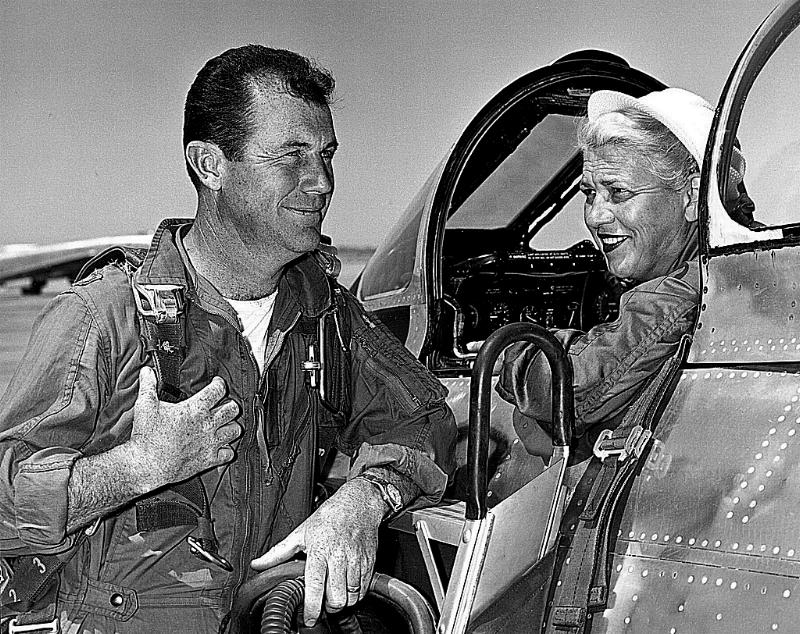
Jackie Cochran, who holds more distance & speed records than any pilot ,living or dead, male or female, becomes the 1st woman to break the sound barrier.  Chuck Yeager, who broke the sound barrier in ’47, was “flying chase” w/ her that day (shown together in this photo).  

She was also the 1st woman to:
·         land & take off from an aircraft carrier,
·         reach Mach 2,
·         pilot a bomber across the No. Atlantic (1941)
·         fly a fixed wing jet aircraft across the Atlantic
·         enter the Bendix Transcontinental Race
·         the only woman to be President of the Federation Aeronautique International (1958–1961)
·         be inducted into the California Aerospace Walk of Fame (2006)

She was the first pilot, man or woman to:
·         make a blind (instrument) landing,
·         fly above 20,000 ft w/ an oxygen mask

(So let me ask the question: “Who’s the greatest pilot you ever saw?” And bonus points if you know what movie that line is from!)  


Saturday, May 4, 2013

May 4: Margaret Thatcher

On this date in History ..... 1979:

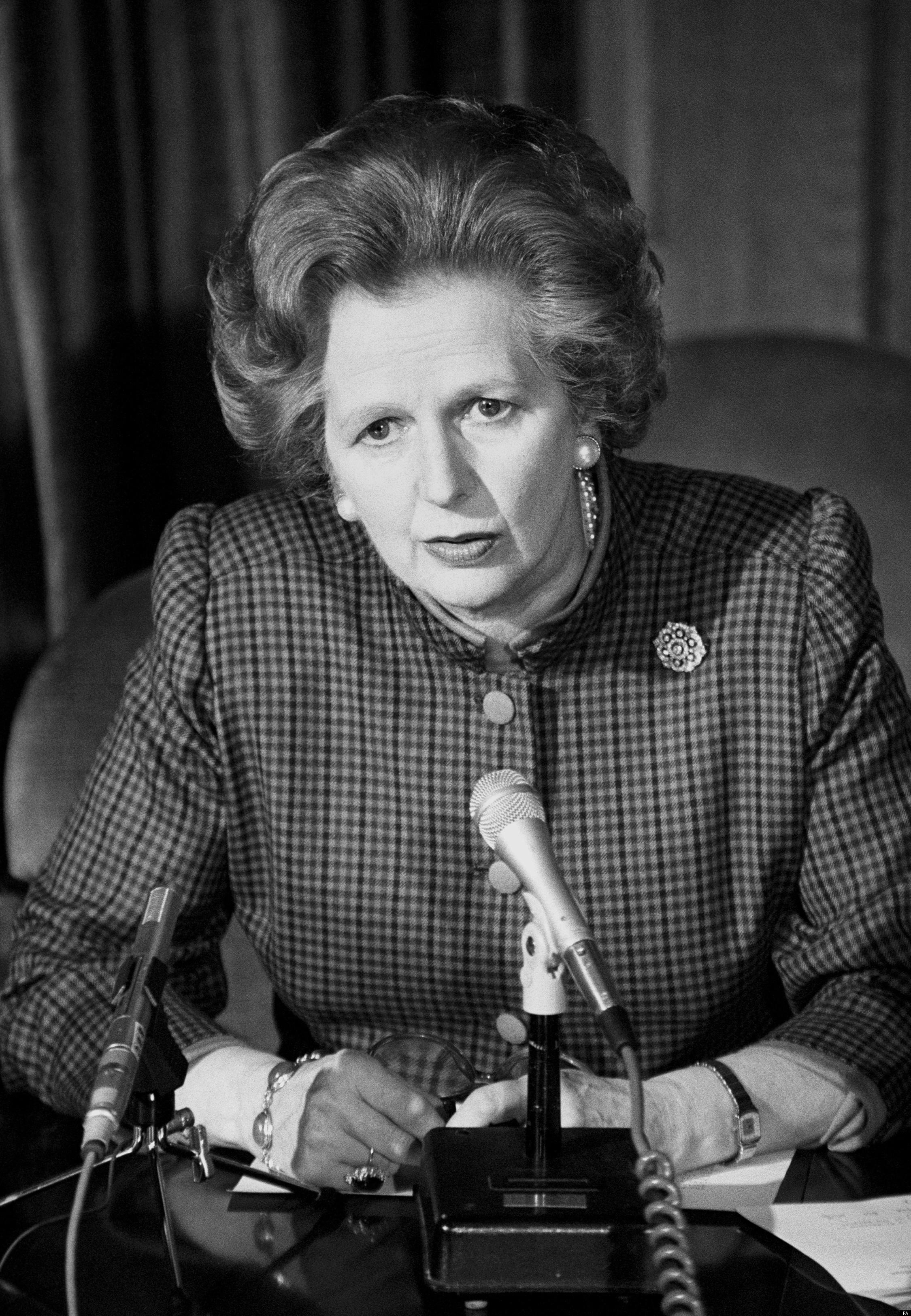
Margaret Thatcher becomes the Prime Minister of the United Kingdom, the first and only woman to hold the office (and she holds the record for holding the office longer than anyone!), and the first woman to head a major political party in the UK. 

Her leadership style earned her the nickname “The Iron Lady” from a Soviet journalist. She escaped an assassination attempt in 1984 and refused to cancel her speech that day. 


Wednesday, April 10, 2013

April 10: American Patent System

On this date in History .... 1790:


Pres. George Washington signed the bill which began the American patent system. For the 1st time in history, the law recognized the right of an inventor to profit from his inventions. 

Early patents were reviewed by Cabinet members until Jefferson realized it was too much to handle. The official patent office was formed in 1802 to take care of the unpredicted volume. 

The first patent was issued in 1790 to Samuel Hopkins for an improvement in the making of potash (used for lye soap). 

The 1st woman to receive a patent is a little muddled. In 1715, Sybilla Masters invented a new corn mill to make hominy from Indian corn.  She took the patent application to England but the patent had to be issued in her husband’s name because she was a woman.  This makes her the first American woman inventor.  

However the 1st actual patent held by a woman was issued to Hannah Slater in 1793 for a new way to spin cotton thread.

.

Friday, January 25, 2013

January 25: Shirley Chisholm

On this date in History .... 1972:

Shirley Chisholm becomes the first major-party black candidate for President of the United States and the first woman (white or black) to run for the Democratic nomination. (The first woman to run for President on the Republican ticket was Sen. Margaret Chase who ran for the Republican nomination in 1950).
 
In 1968, she had become the first African American woman elected to Congress. 
 
A former teacher, she was an advocate for children, education and women’s rights.  In May of 1969 she gave a speech to the House of Representatives in which she introduced the equal rights amendment and pointed out that the bill had been introduced before every Congress for the previous 40 years.
 
To those who argued that women were already protected under the law, she pointed out that ….. "If women are already equal, why is it such an event whenever one gets elected to Congress?"

Thursday, January 24, 2013

January 24: Edith Wharton

On this date in History .... 1862:

Edith Wharton is born. 

She became the first woman to take a Pulitzer (in 1921) for literature for her book, “Age of Innocence” (published in 1920). The story is set in New York in 1870, right in the middle of “The Gilded Age” of America. Her books were filled with stories of the era, attacking and romanticizing the lifestyle of the aristocratic society. 

She was born into a privileged class. Her father was George Frederic Jones and it is said the phrase “keeping up with the Jones’s” was a reference to her father’s family and his generations of wealth. She wrote 23 books and at least 85 short stories. 

The book, “Age of innocence”, can be read free here:  Age of Innocence link


Monday, January 21, 2013

January 21: Women on Juries

On this date in History ..... 1975:

The Supreme Court rules in Taylor vs. Louisiana that women cannot be excluded from jury duty.

Taylor, who had been charged with kidnapping, argued that in the territory of his trial, women made up 53% of the eligible jurors, but there were no women on his jury and were not even any women in the 175 person jury pool. His lawyer argued this did not represent a proper and “fair cross section of the community” that is “essential to the 6th Amendment’s guarantee of an impartial jury.” 

.

Sunday, January 13, 2013

January 13th: Schultz v. Wheaton Glass

On this date in History  ... 1970:

The United States Court of Appeals ruled in Shultz vs. Wheaton Glass that two jobs must be “substantially equal” in terms of what the job is, to qualify under the equal pay ruling of the 1964 Civil Rights Act. 
 
The ruling was considered key in helping to define “equal pay” for men and
women.  The court ruled that a company could not merely change the job title or job description to pay a woman a lower wage than a man. 

.