Showing posts with label Hoover. Show all posts

Tuesday, May 5, 2015

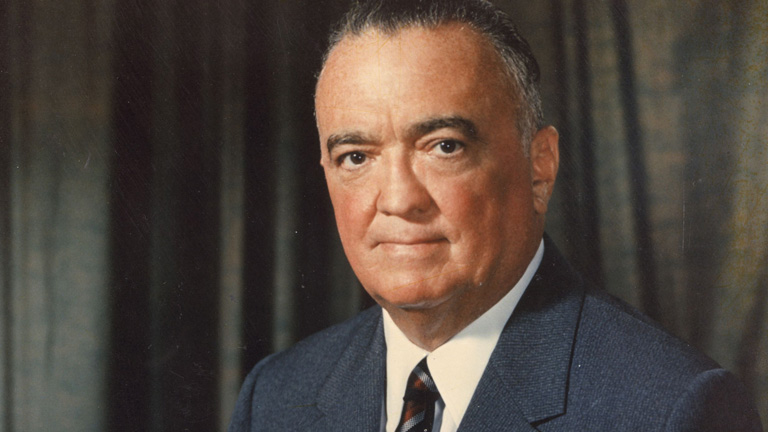
May 2: J. Edgar Hoover Dies

On this date in History ..... May 2, 1972:  

Just before the Watergate scandal erupted, J. Edgar Hoover dies after re-creating and leading the FBI for nearly 5 decades, serving under 8 presidents. 

He built the corruption-ridden agency into an efficient crime-fighting machine, establishing a centralized fingerprint file, a crime laboratory, and a training school for agents. 

After WWII, he worked closely with the House Un-American Activities Committee (HUAC) and Senator Joseph McCarthy, the architect of America's second Red Scare.  

By 1969, Congress was suspicious of the FBI’s abuse of power and for the 1st time Hoover found himself under criticism and the Congressional microscope.  Because of these inquiries, Congress passed laws requiring congressional approval of FBI appointments and limited time in office to only 10 yrs.

Wednesday, June 19, 2013

June 18: Slave Owner Sues for Property

On this date in History ... June 18, 1825: 

Samuel Todd of Kentucky sued William Bulla and Bulla's father-in-law, Andrew Hoover,  both from Wayne County, Indiana, for $500.00 each for loss of property. Todd accused the men of helping his slave Peter escape. 

Peter fled Kentucky in August of 1821 and came to Indiana. He was found in 1825 just north of Richmond, a town on the Indiana/Ohio state line, and had changed his name to George Stellow. While the slave hunter went to the Justice of the Peace, asking him to approve Peter’s removal back to Kentucky, a group of people broke Peter out of jail with “bodily force and violence”.  

With Peter was gone, Todd had no other recourse and he sued Bulla and Hoover, who he believed to be responsible for the loss of property. The judge ordered both men to pay the plaintiff to recover his own debt and costs, a total of $1,500.00.  The lawsuit was handled in federal court because of "Diversity of Citizenship", that is when a person from one state sued a person in another state, the issues was moved to a federal court so that one's own state wouldn't have a biased ruling.

While the information does not specify exactly where "north of Richmond" might be, we might speculate that it could be a tiny town of Newport (today named "Fountain City"), Indiana.  In 1826, Levi Coffin and his wife Catherine moved to Newport and built their home and business.  Coffin would eventually become known as the Grand Master Conductor of the Underground Railroad.  For Peter to live a number of years in this Quaker, abolitionist area is not surprising.

However, William Hoover is reported to have lived near the "middle fork" of the Whitewater RIver less than two miles north of Richmond.  Today, Richmond's water is supplied by the Middlefork Reservoir.

Source for this article: http://www.in.gov

.


Monday, May 20, 2013

May 20: Wickersham Commission

On this date in History .... May 20, 1929:  

President Hoover establishes the Wickersham Commission look into prohibition and make recommendations on how it was working out. It was the first national review of crime and law enforcement and the final report spanned fourteen volumes. 

The majority of the commission rejected the idea of repealing prohibition but at the same time agreed it was unenforceable. The biggest reason, they found, was that the public found prohibition laws contemptable and there was pride in violating the prohibition laws. This attitude also saw an increase in “dry” politicians being voted out of office and replaced with “wet” politicians. 

Prohibition, the law that gave birth to bootleggers and an increase in organized crime, was eventually repealed.

May 10: First Phone in the WHite House

On this date in History .... May 10, 1877:

President Rutherford B. Hayes has the White House's first telephone installed in the mansion’s telegraph room. President Hayes embraced the new technology, though he rarely received phone calls. In fact, the Treasury Department possessed the only other direct phone line to the White House at that time. The White House phone number was "1." 

It would be 50 more years until President Herbert Hoover had the first telephone line installed at the president's desk in the Oval Office.