Friday, February 8, 2013

February 8: "Birth of a Nation"

On this date in History  ..... 1915:

D.W. Griffith’s “Birth of a Nation” is released in Los Angeles. 
 
Made for slightly more than $100,000 (the largest amount ever spent on a film at the time), it grossed over $10 million worldwide in its 1st year. It was the first film shown in the White House, to Woodrow Wilson.
 
While the film has been credited as “groundbreaking”, many cities refused to allow the movie, depicting the Ku Klux Klan as “the good guys”, to be shown.  In many cities where it was shown, riots to protest broke out. Tickets were $2 when it opened, which was really expensive. It equates to about $17-$20 today.
 
Director Griffith had the whole script in his head and didn’t write out one word or keep notes. Black characters were frequently played by white actors in black make-up, particularly those who were required to come in contact with white actresses.
 
The KKK used it as a recruiting tool as late as the 1970s. It is credited with reviving the KKK, which had been considered dead for quite some time.  The same year of the movie's release, the KKK organization staged a 're-birth' in Georgia.
 
The film inspired many African Americans to begin making their own films to counter the images depicted in this one and to show African Americans in a much more positive light with alternative stories.  The NAACP's attempt to ban the film failed.


Thursday, February 7, 2013

February 7: The First "Negro History Week"

On this date in history .... 1926:

The first “Negro History Week”, the precursor to “National Black History Month”, is observed. 

It was the brainchild of Carter G. Woodson, the son of former slaves who is considered the Father of Black History. The second week of February was selected since it included the birthdates of Abraham Lincoln and Frederick Douglass.

After becoming the 2nd Black American to graduate from Harvard with a Ph.D. (W.E.B. DuBois was the first), he began working to include history of Black Americans in mainstream history. He was bothered that history books largely ignored the black population. One Harvard professor told him, “The Negro has no history” and Woodson set out to prove otherwise. He noted that African-American contributions "were overlooked, ignored, and even suppressed by the writers of history textbooks and the teachers who use them."

As a child, he went to school during the four months a year allowed to black children and learned to read from the Bible and newspapers. He worked in coal mines before he was able to attend high school.  He completed a 4-year high school curriculum in just two years. In 1920, as dean of School of Liberal Arts at Howard University, he created the first African-American survey course and founded the Associated Negro Publishers to promote publishing for African-Americans

He once wrote:
“If you can control a man’s thinking, you don’t have to worry about his actions. If you can determine what a man thinks you do not have to worry about what he will do. If you can make a man believe that he is inferior, you don’t have to compel him to seek an inferior status, he will do so without being told and if you can make a man believe that he is justly an outcast, you don’t have to order him to the back door, he will go to the back door on his own and if there is no back door, the very nature of the man will demand that you build one.”

He didn’t live long enough to see his “Negro History Week” turn into “Black History Month” but his devotion to putting the contributions of African Americans into the history books have been far-reaching.

Quoting from Wikipedia:  
“Woodson was ostracized by some of his contemporaries because of his insistence on defining a category of history related to ethnic culture and race. At the time, these educators felt that it was wrong to teach or understand African-American history as separate from more general American history. According to these educators, "Negroes" were simply Americans, darker skinned, but with no history apart from that of any other. Thus Woodson's efforts to get Black culture and history into the curricula of institutions, even historically Black colleges, were often unsuccessful.

Today African-American studies have become specialized fields of study in history, music, culture, literature and other areas; in addition, there is more emphasis on African-American contributions to general American culture. The United States celebrates Black History Month.”

.

Wednesday, February 6, 2013

February 6: "You've Lost That Lovin' Feeling"

On this date in History .... 1965:

 
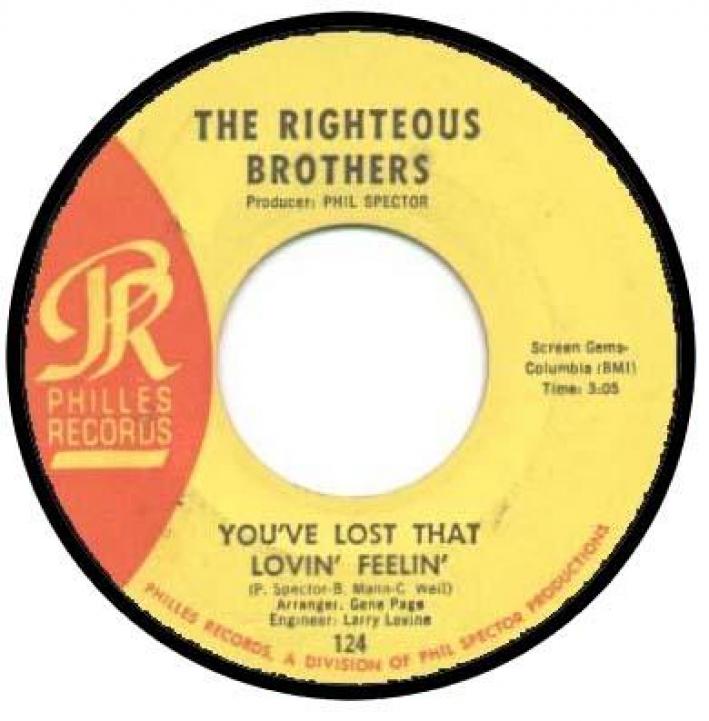
The Righteous Brothers song "You've Lost That Lovin' Feelin'" hits #1.
 
In 1999, it was ranked as the song having more radio and television play in the United States than any other song in the 20th century.  It is one of the rare songs that has no instrumental intro but starts right in with the lyrics.
 
One of the background singers in the 1964 release was a young singer who would become a national icon by using only her first name:  Cher. 
 
The BBC put out a list in 2012 that placed this song in third place on the list of “most profitable” songs.  It was beat out by “Happy Birthday” (first place and now a public domain song) and “White Christmas” (2nd place).

Click here to listen to the song!!

Tuesday, February 5, 2013

February 5: FDR's Announces Court Packing Plan

On this date in History .... 1937:

Franklin Roosevelt announced plans to expand the Supreme Court to up to 15 judges, his argument being to make it “more efficient.”  FDR had become irritated with the Court as they had struck down several of his New Deal bills. FDR plan was to pack the Supreme Court with more liberal judges who would vote with his New Deal ideas.  Before he could put the plan in place, two of the judges switched over to “the liberal side”, making FDR’s reorganization plan unnecessary.  FDR had his first chance to appoint a new justice soon after and by 1942, all but two of the judges were FDR appointees anyway.

Businessmen who found themselves heavily taxed and regulated by FDR’s new programs, pushed back through the courts.  In one of them, the Supreme Court ruled against FDR’s Agricultural Adjustment Act, stating in a 6-3 split that the tax was unconstitutional and that only the states had the power to regulate agriculture.

FDR didn’t want the states to try to piecemeal changes. He believed that only “sweeping federal reforms” could fix the problems of the Depression.  He claimed the court was overwhelmed with cases as his reasoning for adding more judges …. judges that HE would appoint to make sure his programs were passed without problem.

It is historical irony that FDR almost achieved his plan when five justices retired and two died, giving FDR the opportunity to appoint seven of the nine seated justices anyway


.

Monday, February 4, 2013

February 4: Confederate States Congress

On this date in History .... 1861:

The Provisional Confederate Congress convenes and begins drafting a constitution.  The Confederate Constitution was modeled after the U.S. Constitution, using many parts of it word for word.  Some differences included: 


·         The president would serve for a six-year term.

·         The word “slave” was actually used and the institution of slavery was protected in all existing and future states. However ….

·         The importation of slaves was banned for fear of making enemies of European countries and fear of diminishing the existing (and profitable) slave trade already going on in the southern United States.

·         The president was given a line-item veto.

·         States powers were enhanced by banning governmental money for internal improvements.

Jefferson Davis was selected as the President of the Confederate States.  He was officially "elected" (ran unopposed) to a six-year term on November 6, 1861. He never served the full six years since the Confederacy was disolved in 1865. 

Davis graduated 23rd in his class from West Point and came from a family filled with military tradition.  His father and uncles fought in the Revoluntionary War.  All of his older brothers fought in the War of 1812.  Davis himself proved himself in the military during the Blackhawk War of 1831 when Chief Blackhawk was captured and placed under the care of Davis.  Davis won Blackhawk over due to the kind care Davis extended to the chief.

Davis's first wife was Sara Knox Taylor, daughter of General Zachary Taylor, who would become a President of the United Stated.  The General did not approve of the marriage and Davis resigned his military position "to take up civic duties" before the marriage.  Sara died of malaria just a few months into their marriage.

Sunday, February 3, 2013

February 3: Buddy Holly Dies

On this date in History ..... 1959:

Rock stars Buddy Holly, Ritchie Valens and J.P. "The Big Bopper" Richardson are killed when their chartered plane crashes in Iowa. Waylon Jennings, who was supposed to be on the plane, gave up his space to Richardson, who was ill. 

Pilot error (pilot was not qualified to fly by instruments) and bad weather were blamed for the accident. Holly and his band, the Crickets, had just scored a No. 1 hit with "That'll Be the Day."  

                                                                         Holly used a shorter spelling of his name (it was actually “Holley”) when it was recorded wrong in a contract and he just liked the shorter spelling better.  


He was a charter (first year) inductee into the newly formed Rock and Roll Hall of Fame in 1986. 

Singer Don McLean memorialized Holly, Valens and Richardson in the 1972 No. 1 hit "American Pie," which refers to February 3, 1959 as "the day the music died." 

Click here to hear "American Pie" by Don McLean

.

Saturday, February 2, 2013

February 2: Queen Victoria's Funeral

On this date in History .... 1901:


The military state funeral of Queen Victoria is held in St. George’s Chapel, Windsor Castle. Queen Victoria's funeral was one of the earliest events recorded by British Pathe.
 
After 63 years on the throne, Victoria died at the age of 81 at Osborne House on The Isle of Wight as the longest reigning monarch in history, ruling from 1837 to 1901. She saw ten Prime Ministers come and go.
 
She had left detailed instructions on how she wanted her funeral, including a list of items that she wanted in the coffin with her, such as her late husband’s dressing gown, some photos, and her wedding veil placed over her face. Her coffin was carried by a gun carriage and pulled by eight white horses, to honor her request for a white military funeral.
 
She became queen at an early age (18) after her father and three uncles died at early ages.  Her marriage to Prince Albert in 1840 produced nine children, most of whom married into other royal families.  The death of her husband at the young age of 42, left her in a deep depression and she wore mourning black for the rest of her reign.
 
Queen Victoria and
Prince Albert on their
Wedding Day.

She is credited for the famous quote "We are not amused" and for her influence on wedding fashion. While she was not the first royal bride to wear a white gow, she was the first to wear one in the age of the newly developed science of photography, making her white wedding dress world news. Her style still influences wedding gown designs today.